How to Overcome Subconscious Barriers to Success in Leadership
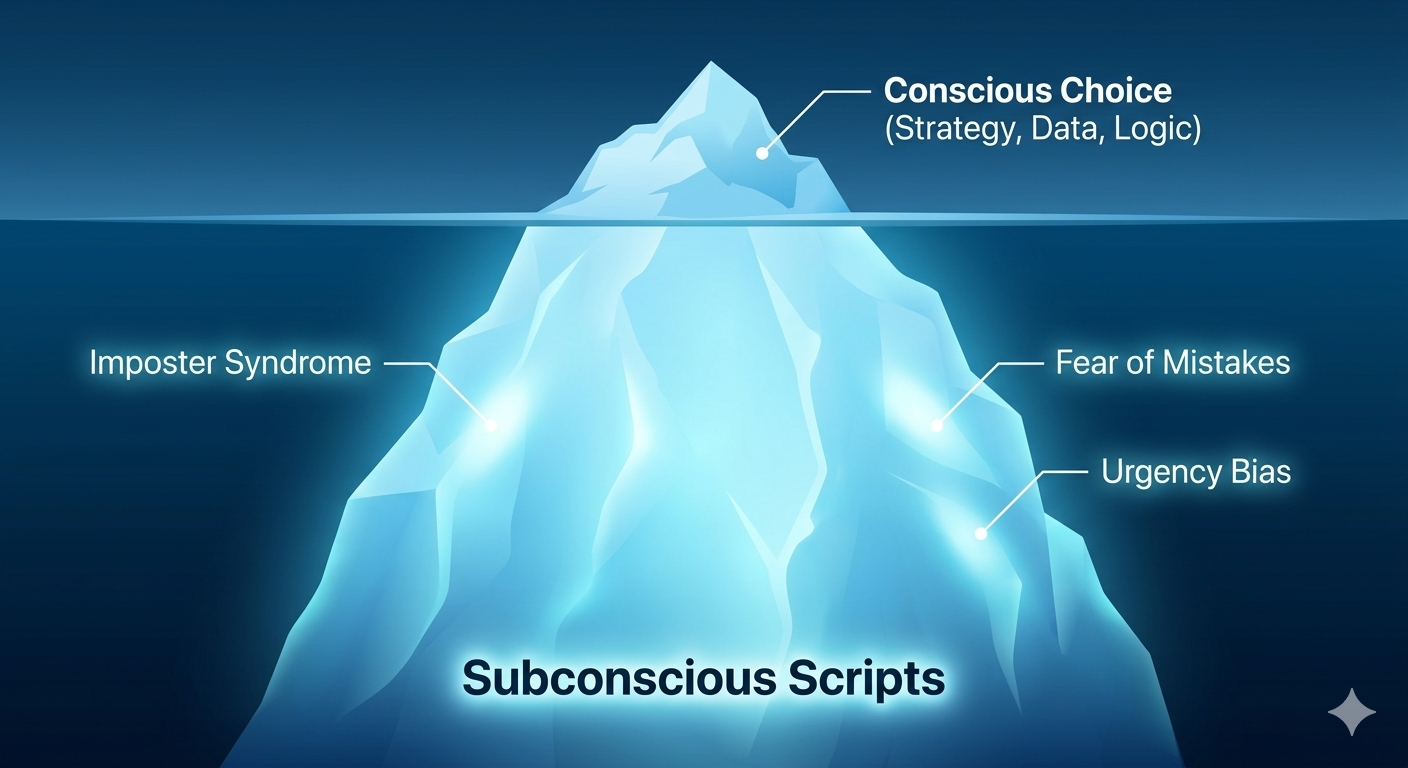
Think mindset is just about confidence? Think again. Deep-rooted subconscious beliefs quietly shape leadership success, driving how executives make critical decisions, manage teams, and respond under corporate pressure. Many leaders find themselves hitting an invisible ceiling, completely unaware that their own internalized scripts are creating systemic roadblocks.
## The Neurological Mechanics of Executive Roadblocks
The subconscious mind serves as the primary operational engine of human behavior. When leaders harbor unexamined, self-limiting beliefs, their brain patterns shift automatically.
[Self-Limiting Belief] ──> [Neurological Stress Response] ──> [Diminished Executive Function]
Neuroscience demonstrates that hidden patterns like imposter syndrome or a profound fear of making mistakes trigger chronic stress responses. This biological tax actively reduces executive function, narrowing problem-solving capacity exactly when high-level clarity is required. Leaders often battle an unhealthy urgency for immediate results, an inability to say no, or a deep fear of making critical mistakes, which stems directly from these deep neural pathways.
## Signs of Subconscious Self-Sabotage in Leadership
Unconscious mental patterns manifest as visible, highly destructive professional habits. Executives holding significant self-doubt often avoid taking necessary strategic risks, even when possessing perfect qualifications.
- Risk Avoidance: Hesitating on market expansion due to hidden survival fears.
- Financial Sabotage: Underpricing high-value services due to internalized scripts like "I'm not enough".
- Chronic Burnout: Micro-managing teams because delegating control feels inherently unsafe.
These behavioral traps limit corporate earning potential and stall organizational momentum. Addressing these underlying loops is a critical strategic imperative for unlocking long-term organizational success.
## Actionable Protocols to Cleanse Corporate Mindsets
To dismantle these hidden barriers, leaders must treat internal alignment as a business metrics problem. Rewiring the subconscious mind requires deliberate, structured behavioral intervention and leveraging neuroplasticity.
Operational Phase |
Action Step |
Expected Institutional Outcome |
1. Identification |
Perform a thorough internal belief audit. |
Surfaces hidden self-sabotaging drivers and automated mental scripts. |
2. Pattern Disruption |
Use mindfulness to pause before major decisions. |
Shifts automatic, biased neural pathways into objective executive instincts. |
3. Realignment |
Intentionally repeat and cement new narratives. |
Replaces limiting scripts with data-driven strategic choices. |
Shifting these inner paradigms directly influences workplace culture and sustainable business growth. When executives operate with clean subconscious scripts, their teams naturally mirror that clarity and efficiency.
## Frequently Asked Questions
What are the primary subconscious roadblocks in corporate leadership?
The most frequent subconscious roadblocks include an intense fear of failure, financial scarcity scripts, deep-seated imposter syndrome, and an inability to say no.
How do self-limiting beliefs physically affect decision-making?
Self-limiting beliefs trigger subtle biological stress responses in the brain, which measurably reduces overall problem-solving abilities, focus, and executive function.
Can subconscious patterns cause real-world business failure?
Yes, negative underlying beliefs can cause leaders to underprice services, experience severe burnout, or suffer from structural inertia that blocks organizational growth.
References